
Audi are highly respected in the automotive industry and in the world of motorsport. In the past, the company has placed its central focus on racing in sports cars and has especially enjoyed success at the Le Mans 24 hours, an event it has won 13 times.
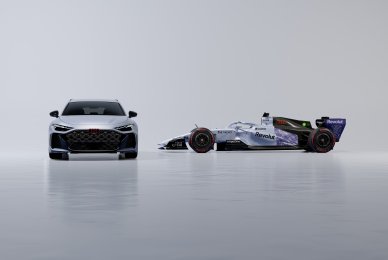
In the 1930s, Audi participated in grand prix racing as part of a union, but now it appears the company is making a return to the world of grand prix racing in 2026. Of course, the mere mention of Audi entering F1 will inspire confidence in some who like to bet on F1 and will have them checking the F1 odds to see if the sportsbooks have the same confidence as they do in Audi as F1 competitor. Below is a look at the reasons why Audi is moving into F1, who is involved and how the competitor will set itself apart from the other teams.
What’s actually happening?
In August 2022, Audi hit the sports headlines by announcing they would become the power unit supplier for Sauber. The company will develop the unit at its Audi Sport facility in Neuburg an der Donau, which is close to Audi’s AG headquarters in Ingolstadt, Germany. There are already test benches for F1 engine testing and for testing electric motors and batteries, and a separate company has been founded as a subsidiary of Audi Sport for the power unit project.A few months later, the company also announced they’d become a minority stakeholder in the company. This marks their clear entry into F1.
Audi have their reasons
Changes in the rules for 2026 have seen manufacturers agree to abandon the motor generator unit from the hybridized and turbocharged V6 engines. New suppliers will be granted more testing time and also enjoy larger budgets.Sustainability has been another key factor in Audi’s decision to move to F1. The engines will run on sustainable fuel, which was one of the company’s conditions for its entry into the sport. Audi believes the electric motor could generate as much power as the 1.6-liter turbocharged engines.
Getting the show on the road
Audi’s entry into the F1 marks the end of its motorsport restructuring. In September 2022, managing director Julius Seebach joined Audi Sport and moved into a strategic business area in Technical Development.His successor is Rolf Michl, the former Chief Operating Officer Racing at Audi Sport GmbH, who stepped into Mr. Seebach’s shoes on September 1. Along with Dr Sebastian Grams, Mr. Michl forms the management board of Audi Sport. Adam Baker took over the company management and, as a result, of the Formula 1 project, as CEO. In December, Andreas Seidl will leave McLaren and join Audi as the team’s new CEO.
In June 2023, Audi announced the first driver to join their team ahead of the company’s 2026 entry. The driver in question is former Le Mans winner Neel Jani. Previously, Jani, who is 39 years old, has been an F1 test driver and reserve driver for Red Bull. He has driven in GP 2, Formula E and Le Mans. Jani has joined as a simulator driver and will support Audi’s development of the power unit with simulator work. Audi hope to test the power train by the end of the year.
By developing their unit several years before entry into the sport Audi have clearly learned from the disastrous, failed partnership between Honda and McLaren. The latter encountered problems in testing the Honda engine in 2014 in its debut testing, in pre-season testing in 2015 and with the engine on some of the race days of 2015 and 2017.
Meanwhile, Sauber, who Audi are partnering up with, will still be responsible for manufacturing and developing the car.
Setting itself apart from the field
The partnership will be good for Sauber, who believe that it will carry them closer to the front in F1. The partnership will transform them into a more respectable, more competitive midfield team. Observers believe they have some way to go before being able to truly challenge upper midfield teams such as Alpine and McLaren. Then they can start to think about Red Bull, Ferrari and Mercedes.Audi’s decision means that it’s building a separate engine from fellow Volkswagen group manufacturer Porsche, who were going to enter into F1 with Red Bull but failed when the deal fell through. The need to optimize engines and the fact that a separate engine could integrate with different chassis were behind Audi’s decision.
It’s crucial that Audi have given themselves plenty of time to produce a reliable power unit. This, combined with Audi’s experience in manufacturing, could make all the difference when the drivers take the cars out onto the racetrack in 2026.
2026 is still a few years away, but the motorsport will be excited to see how Audi’s foray into F1 pans out. Audi is a benchmark in the automotive industry and in motorsport, so other teams should be very afraid, at least.